
- Services
Regulatory & Litigation Risk Briefing
Defensive Positioning of the Emissions Avoidance Project
This briefing outlines the regulatory, enforcement, and litigation risk landscape relevant to climate-related claims and explains how the emissions avoidance project is structured to remain defensible under scrutiny.
It is intended for boards, general counsel, compliance officers, insurers, auditors, and institutional counterparties.
1. The Current Risk Environment
Climate-related claims are increasingly evaluated under frameworks traditionally applied to:
- Financial disclosures
- Consumer protection and advertising law
- Securities-adjacent misrepresentation standards
- Shareholder and NGO-driven litigation
“Voluntary” status no longer implies reduced liability exposure.
Claims that cannot be substantiated with evidence are now routinely challenged after the fact, sometimes years after issuance or use.
2. Primary Regulatory Risk Vectors
A. Misrepresentation and Greenwashing
Regulators are scrutinizing whether:
- Claims overstate environmental impact
- Permanence is asserted without enforceable support
- Marketing language exceeds technical documentation
Risk arises when narrative replaces evidence.
B. Permanence and Reversal Risk
Projects relying on:
- Future ecosystem performance
- Continued operator behavior
- Probability-based buffers
Face heightened risk if permanence is later questioned.
C. Double Counting and Ownership Ambiguity
Regulatory concern increases when:
- Claims are abstracted from asset control
- Registries serve as the sole source of authority
- Multiple parties could plausibly assert the same benefit
D. Disclosure Inconsistency
Litigation risk escalates when:
- Public claims differ from technical documents
- ESG disclosures diverge from financial risk statements
Methodological limitations are not clearly disclosed
3. Litigation Exposure Trends
Recent climate-related actions commonly allege:
- False or misleading environmental claims
- Failure to disclose material uncertainty
- Overstatement of permanence or impact
- Reliance on standards insufficient for the claim made
Claims are increasingly evaluated using retrospective standards, not the norms in place at issuance.
4. Defensive Design of the Project
The project was structured to address these risk vectors at inception.
Ownership-Based Control
Claims are grounded in direct ownership and control of the underlying asset located in Los Angeles County, California, USA (onshore), eliminating reliance on third-party behavior.
Enforced Permanence
Permanence is achieved by prohibiting the emissions-causing activity itself—extraction—rather than managing risk after emissions occur.
This eliminates:
- Reversal scenarios
- Buffer dependency
- Ongoing performance risk
Conservative Quantification
Avoided emissions are quantified using:
- Credible, economically viable baselines
- Historical production data
- Conservative lifecycle emissions factors
The methodology prioritizes defensibility over volume.
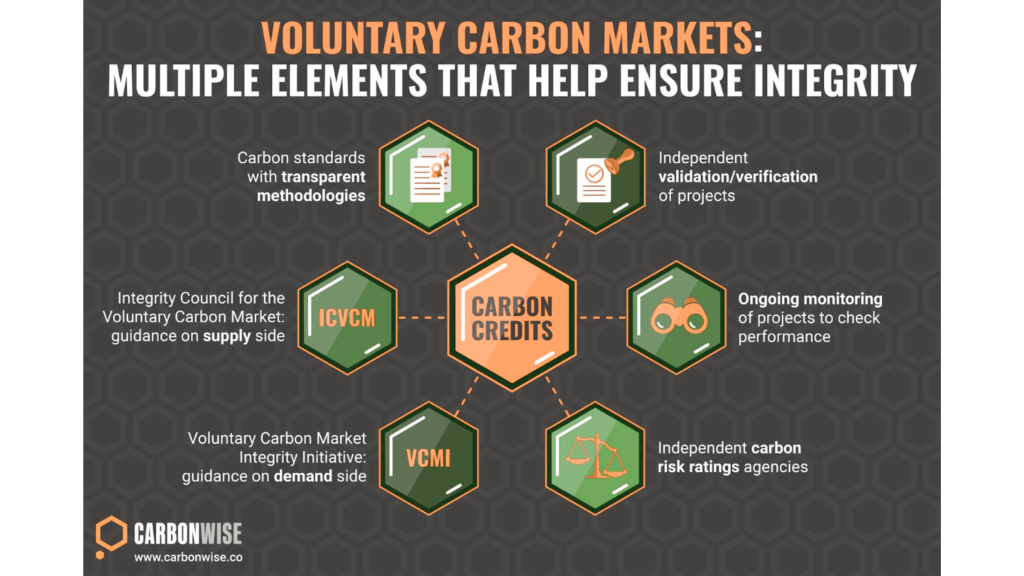
Independent Validation
Third-party validation under ISO 14064-3 provides documented, independent review of:
- Methodological appropriateness
- Baseline credibility
- Additionality and permanence rationale
Validation strengthens evidentiary posture but does not substitute for disclosure discipline.
5. Disclosure Risk Management
The project applies explicit disclosure controls:
- Claims are limited to what is documented and validated
- Uncertainty and limitations are acknowledged
- No qualitative superiority claims are made without evidence
- Marketing language is constrained by technical reality
This alignment reduces exposure under consumer protection and securities-style review.
6. Resilience to Regulatory Change
The project is designed to remain defensible even if:
- Voluntary standards consolidate or tighten
- Registry rules evolve
- Definitions of permanence are refined
- Claims are reviewed under new regulatory guidance
Because the core assertions rest on ownership, law, and independent validation, they do not depend on policy continuity.
7. Implications for Counterparties
For counterparties, this structure offers:
- Reduced greenwashing exposure
- Clear audit and evidentiary trails
- Lower reliance on interpretive standards
- Claims defensible in adversarial review
The project is positioned as low narrative risk, high documentation integrity.
8. What This Briefing Does Not Claim
This briefing does not assert that:
- Regulatory risk is eliminated
- Litigation is impossible
- Claims are immune to challenge
It asserts that the project is built to withstand challenge, which is the relevant standard in the current environment.
Regulatory & Litigation Risk Briefing
Summary
The emissions avoidance project is defensively positioned because it:
- Prevents emissions at the source
- Enforces permanence through ownership and law
- Quantifies conservatively
- Separates documentation from marketing
- Anticipates retrospective scrutiny
In an environment where climate claims are increasingly tested, defensibility—not popularity—is the controlling risk metric.