- The Project
Project Boundary & Asset Scope
What Is Included — and Explicitly Excluded — From the Project
This page defines the explicit geographic, legal, and asset boundaries of the emissions avoidance project.
Its purpose is interpretive containment: to ensure that no reader infers impacts, claims, or authority beyond what is documented.
Boundaries are a critical control.
Anything outside them is not part of the project.
1. Geographic Boundary
Defined Project Area
The project is geographically limited to the portion of the project located in Los Angeles County, California, USA (onshore) over which Jedon Kotler holds relevant mineral and subsurface rights.
The project boundary:
- Is asset-specific
- Is legally defined by title and mineral rights documentation
- Does not extend to adjacent parcels, fields, or regional basins
There is no implied expansion beyond documented ownership.
2. Asset Scope
Included Assets
The project includes only:
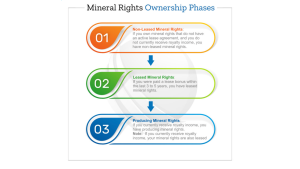
- Mineral and subsurface rights controlled by Jedon Kotler
- Hydrocarbon reserves associated with those rights
- Extraction activities that could occur under those rights absent the project
These assets form the sole basis for:
- The baseline scenario
- The emissions avoidance calculation
The permanence claim
Explicitly Excluded Assets
The project does not claim responsibility for economy-wide market outcomes or policy-driven changes outside the defined project boundary. However, quantification conservatively accounts for market-mediated leakage using the Prest dynamic formulation, with a leakage rate of 56% applied in the emissions accounting. The project therefore does not claim to control external market behavior; it applies a conservative deduction to avoid overstating net avoided emissions.
3. Legal Boundary
Control-Based Limitation
The project boundary is constrained by legal authority, not physical proximity.
Only activities over which Jedon Kotler has:
- Ownership
- Legal control
- Authority to prohibit extraction
are included.
Activities beyond that control—even if geographically nearby—are excluded.
Baseline emissions reflect the extraction, processing, transport, and end-use pathway that would have occurred absent forbearance. Project emissions are limited to residual site-management emissions, including potential plugged-well methane leakage where applicable.
4. Operational Boundary
Included Activities (Prevented)
The project concerns the prevention of:
- Hydrocarbon extraction
- Associated direct and indirect emissions that would have resulted from that extraction
No operational activities are performed as part of the project.
Excluded Activities
The project does not involve:
- Ongoing operations
- Production management
- Emissions reduction technologies
- Monitoring of third-party behavior
The absence of activity is itself the mechanism of avoidance.
5. Emissions Accounting Boundary
Included Emissions (If Production Occurred)
For accounting purposes, the project considers:
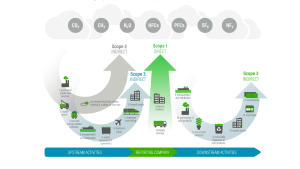
- Scope 1 emissions from extraction
- Scope 2 emissions from energy use
- Scope 3 emissions from processing, transport, and combustion
These are included only to quantify what would have occurred under production.
Excluded Emissions
The project does not account for:
- Emissions from other oil fields
- Economy-wide demand effects
- Price or substitution impacts
- Policy-driven changes elsewhere
No system-wide or market-level effects are claimed.
6. Temporal Boundary
The project boundary applies:
- From the point at which extraction is prohibited
- For the duration that ownership and legal controls remain in effect
The project does not:
- Assume future policy changes
- Extend claims beyond enforceable control
If boundaries change, claims must be reassessed and disclosed.
7. Why Boundary Discipline Matters
Clear boundaries:
- Prevent claim inflation
- Reduce misinterpretation
- Support audit and regulatory review
- Protect against implied responsibility for external outcomes
Boundary discipline is a cornerstone of defensibility.
8. What This Page Does Not Claim
For clarity, this page does not claim that the project:
- Affects oil production elsewhere
- Influences regional or global markets
- Represents a policy instrument
- Extends beyond documented ownership
All such interpretations are outside project scope.
Summary
Project Boundary & Asset Scope
The emissions avoidance project is:
- Geographically limited to defined assets
- Legally constrained by ownership and control
- Operationally narrow, involving non-extraction only
- Explicitly bounded to prevent overreach
Anything outside these boundaries is not part of the project.