- Governance
Governance & Disclosure
How Claims Are Controlled, Reviewed, and Communicated
Jedon Kotler’s approach to governance and disclosure is designed for an environment in which climate-related claims are subject to regulatory scrutiny, audit review, and legal challenge.
This page explains—clearly and publicly—how decisions are made, how claims are controlled, and how disclosures are disciplined, without relying on technical or legal memoranda.
Risk, valuation, transaction, and institutional-use materials are not public and are available only through controlled diligence.
Public materials do not include pricing, valuation, investment-grade treatment, or detailed risk analysis. Public materials should not be treated as legal, accounting, investment, valuation, or transaction advice.
NTCE minting / recordation approval is pending.
1. Governance Philosophy
Jedon Kotler operates under a simple governing principle:
No climate-related claim is made unless it can be supported by evidence, enforced by control, and defended under scrutiny.
Governance is structured to prioritize:
- Accuracy over advocacy
- Documentation over narrative
- Long-term defensibility over short-term acceptance
This philosophy applies across asset management, methodology application, verification, and public communications.
2. Organizational Roles & Oversight
Asset Stewardship
Jedon Kotler is the owner and steward of the underlying asset associated with the project located in Los Angeles County, California, USA (onshore) As owner, Jedon Kotler has direct authority over whether hydrocarbons are extracted or withheld.
This ownership-based control is the foundation of permanence.
Independent Functions
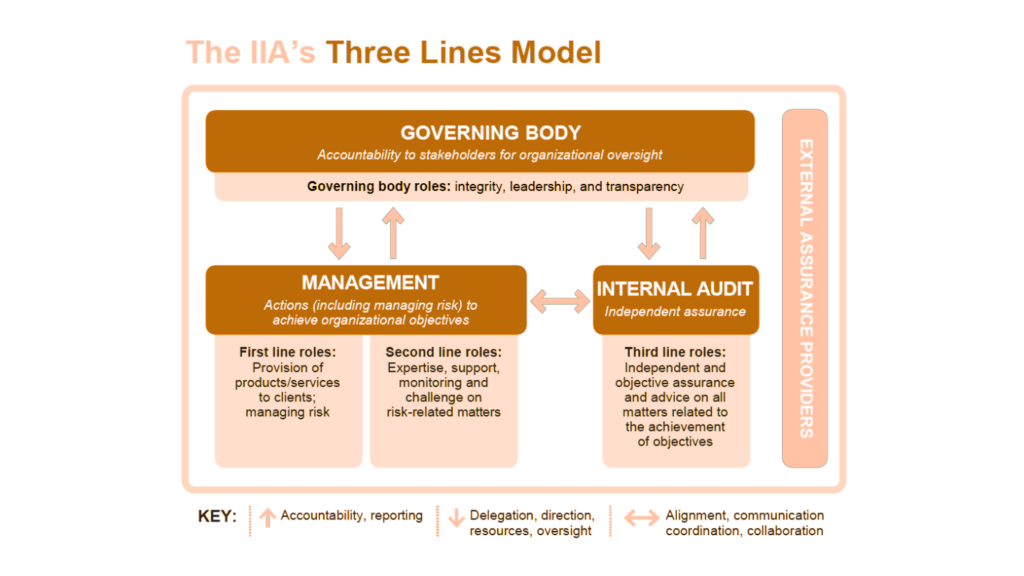
Critical project functions are intentionally separated:
- Methodology Development:
Developed using recognized greenhouse gas accounting principles and standards - Independent verification:
Performed by accredited third-party validators operating under ISO 14064-3 - Governance & Disclosure Oversight:
Maintained internally to ensure consistency between documentation and public statements
No single function unilaterally controls asset ownership, methodology, verification, and disclosure.
3. Claim Approval & Control Process
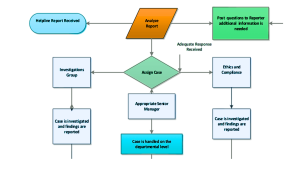
All climate-related claims pass through a controlled internal review process before public release.
This process includes:
- Verification that the claim is supported by documented evidence
- Confirmation that any environmental benefit claim made upon the consumption or retirement of a carbon credit is accurate, appropriate, and supported by documented evidence.
- Review for consistency with regulatory and disclosure expectations
- Approval by designated governance personnel
Claims that exceed documented or validated support are not approved.
4. Disclosure Discipline
Jedon Kotler applies a documentation-first disclosure posture.
This means:
- Public statements are constrained by technical documentation
- Qualitative or comparative claims are avoided unless explicitly supported
- Assumptions and limitations are acknowledged where relevant
The objective is not to maximize perceived impact, but to ensure accuracy, consistency, and defensibility.
Environmental benefit claims may be made upon the consumption, or retirement, of a carbon credit. Companies are responsible for ensuring their public statements are accurate and appropriate.
5. Separation of Documentation and Communications
To reduce misrepresentation risk, Jedon Kotler maintains a clear separation between:
- Technical Documentation
(methodologies, verification reports, legal instruments) - Public Communications
(website content, summaries, explanatory materials)
Public-facing materials are derived from, and limited by, underlying documentation.
They do not replace or reinterpret it.
6. Greenwashing Risk Management
The governance framework explicitly addresses common greenwashing risk vectors:
- Permanence: enforced through ownership and legal restraint, not modeled
- Reversal: structurally eliminated through non-extraction
- Double counting: mitigated through singular asset ownership and claim control
- Overstatement: prevented through conservative language and internal review
Claims are intentionally narrower than what might be commercially advantageous.
7. Alignment With Evolving Expectations
Although the project operates on a voluntary basis, its governance and disclosure approach anticipates:
- Increased regulatory attention to climate claims
- Heightened audit and assurance expectations
- Retrospective review of public disclosures
The project is designed to remain defensible even if standards tighten over time.
8. What This Page Does—and Does Not—Represent
This page:
- Explains how governance and disclosure decisions are made
- Describes controls applied to climate-related claims
- Clarifies Jedon Kotler’s disclosure philosophy
This page does not:
- Substitute for technical documentation
- Provide legal advice
- Represent a guarantee of regulatory acceptance
Its purpose is transparency around process and discipline.
Summary
Governance & Disclosure
Jedon Kotler’s governance and disclosure framework is defined by:
- Ownership-based control
- Independent validation
- Conservative, evidence-led claims
- Clear separation of roles and functions
- Preparation for scrutiny rather than avoidance of it
In a climate landscape increasingly defined by accountability, governance is not a formality—it is a safeguard.