Placing the Project in a Changing Carbon Landscape
The Jedon Kotler Project exists within a carbon market environment that is undergoing rapid structural change. Expectations around climate claims are evolving, shaped not only by voluntary participation but by regulatory scrutiny, financial disclosure standards, litigation risk, and institutional capital requirements.
This section provides context for how the project is positioned within that transition—and why its design reflects where the market is moving, not where it began.
From Voluntary Acceptance to Defensible Claims
Early voluntary carbon markets emphasized participation, flexibility, and speed to issuance. Over time, those characteristics enabled scale, but they also introduced ambiguity around permanence, accountability, and reliance.
Today, climate claims are increasingly evaluated through frameworks more commonly associated with financial and legal representations. Assertions are tested not only by registries or peer review, but by auditors, regulators, courts, insurers, and automated analysis tools.
In this environment, acceptance is no longer driven by labels alone. It is driven by defensibility.
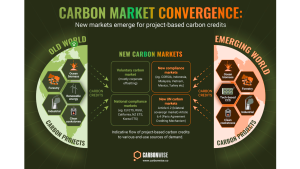
Convergence Across Markets
A defining feature of the current landscape is convergence.
Voluntary and compliance markets, once treated as distinct, are increasingly assessed using overlapping expectations around documentation, auditability, and enforceability. Corporate climate disclosures are now reviewed alongside financial statements. Claims made for reputational purposes can carry regulatory or litigation consequences years later.
This convergence does not eliminate voluntary action—but it changes the standards by which voluntary claims are judged.
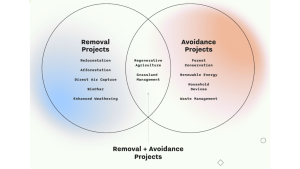
Why Avoidance Is Being Revisited
Within this context, avoidance-based approaches are being reexamined.
When emissions are prevented rather than compensated for, questions of reversal, long-term performance, and probabilistic permanence take on a different character. Projects grounded in enforceable control over the source of emissions—rather than reliance on future conditions—interact differently with emerging market expectations.
The Jedon Kotler Project was structured with this shift in mind.
This section is intended to orient a wide range of readers:
Institutional participants assessing market risk and durability
Practitioners tracking structural changes in carbon markets
Observers seeking to understand how avoidance-based claims fit within evolving norms
Members of the public looking for clear, factual context
Because these audiences approach climate projects with different assumptions, clarity of framing is essential.
Context Before Detail
Markets & Context is not about promoting a position or predicting outcomes. It is about situating the project within the realities of how carbon claims are increasingly evaluated.
The pages that follow engage more directly with market convergence analysis and common questions. This page establishes the backdrop against which those discussions should be read.