- Emissions Avoidance Project
Executive Summary for
Boards & Investment Committees
Emissions Avoidance Project
Purpose of This Summary
This executive summary provides board directors and investment committee members with a concise, decision-relevant overview of the emissions avoidance project located in Los Angeles County, California, USA (onshore)
. It focuses on risk, defensibility, governance, and strategic relevance in a market environment defined by increasing regulatory scrutiny and greenwashing enforcement.
1. Strategic Overview
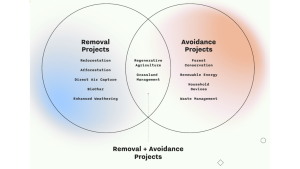
The project is an emissions avoidance initiative, not a traditional carbon offset program. It is based on the permanent non-extraction of economically viable oil and gas reserves, resulting in the prevention of greenhouse gas emissions across the full hydrocarbon lifecycle.
The project is anchored at thelocated in Los Angeles County, California, USA (onshore), a historically productive and technically viable asset. Independent analysis confirms that production could occur under conventional economic assumptions. The climate benefit arises because it does not.
Core distinction:
Emissions are prevented at the source, rather than compensated for after release.
2. Why This Structure Matters Now
Carbon and climate-related claims are increasingly evaluated under standards traditionally applied to:
- Financial disclosures
- Consumer protection law
- Securities and misrepresentation frameworks
- Litigation and retrospective regulatory review
Projects designed primarily for voluntary market acceptance face rising reputational, regulatory, and legal risk.
The project was structured from inception to remain defensible under this convergence.
3. Permanence and Risk Profile
Permanence by Enforcement
- Permanence is achieved through ownership and legal restraint, not modeling or probability
- Hydrocarbon extraction is prohibited, eliminating the emissions-causing activity itself
- There is no reliance on future ecosystem performance, operational continuity, or behavioral compliance
Result: Reversal risk is structurally eliminated, not mitigated.
Risk Comparison (High Level)
|
Risk Dimension |
Traditional Offsets |
The Project |
|
Reversal risk |
Managed via buffers/insurance |
Eliminated by non-extraction |
|
Permanence basis |
Probabilistic |
Enforced |
|
Claim authority |
Registry-based |
Ownership-based |
|
Audit defensibility |
Variable |
High |
|
Litigation exposure |
Increasing |
Actively managed |
4. Methodology & Independent Validation
- Avoided emissions are quantified using a conservative, lifecycle-based methodology
- Baselines are grounded in historical production data and economic viability, not speculative scenarios
- Emissions accounting includes Scope 1, 2, and 3 impacts that would have occurred under production
The methodology and its application have undergone independent third-party validation under ISO 14064-3, providing documented confirmation that:
- The baseline is credible
- Additionality is demonstrated
- Permanence claims are supported by evidence
- Data and assumptions are consistent with international standards
Validation strengthens audit and disclosure readiness but does not rely on registry participation.
5. Disclosure & Governance Posture
The project applies a documentation-first disclosure philosophy:
- Claims are limited strictly to what is evidenced and validated
- Uncertainty and limitations are explicitly acknowledged
- Marketing language is constrained by technical documentation
This approach is designed to align ESG-related statements with fiduciary, audit, and risk oversight expectations.
6. Regulatory and Litigation Readiness
The project is positioned to remain defensible even if:
- Voluntary standards consolidate or tighten
- Definitions of permanence evolve
- Claims are reviewed years later under new guidance
- Scrutiny arises from regulators, courts, or stakeholders
Because core claims rest on ownership, enforceability, conservative accounting, and independent validation, they do not depend on market convention or policy continuity.
7. Investment & Governance Implications
For boards and investment committees, the project offers:
- Lower greenwashing and misrepresentation exposure
- Clear audit and evidentiary trails
- Strong alignment between climate claims and governance standards
- A structure optimized for long-term credibility rather than short-term optics
The project is best understood as defensive climate integrity infrastructure, not a speculative environmental instrument.
Executive Summary for Boards & Investment Committees
Bottom Line for Decision-Makers
The emissions avoidance project is designed to answer the most critical question boards and committees now face:
“Can this climate claim withstand regulatory, legal, and reputational scrutiny years after it is made?”
By grounding permanence in ownership and law, quantifying conservatively, and validating independently, the project is structured so that the answer is yes.
Available next materials for committees or boards:
- One-page Investment Committee Decision Brief
- Audit Committee Deep-Dive (risk, disclosure, controls)
- Director Fiduciary Risk Appendix