- The Project
Questions We Get — But Do Not Answer
What This Project Intentionally Does Not Claim
This page lists common questions that Jedon Kotler is frequently asked about the emissions avoidance project—but does not answer directly by design.
The purpose is not avoidance.
It is discipline.
Some questions, while understandable, invite oversimplification, misrepresentation, or conclusions that exceed documented scope. This page explains why certain questions are not answered in the way they are often asked.
1. “How many tons of carbon does this cancel?”
Why we don’t answer it that way:
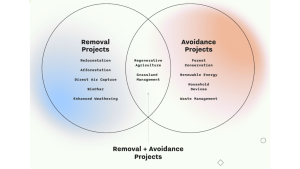
The project does not “cancel” emissions. It prevents emissions from occurring by prohibiting extraction at the project located in Los Angeles County, California, USA (onshore)
Quantified avoided emissions are documented and validated, but framing them as “cancellation” implies offsetting or neutralization, which this project does not claim.
What we do provide instead:
Documented, conservative emissions avoidance quantities with clear scope and limitations.
2. “Is this the same as being carbon neutral?”
Why we don’t answer it:
“Carbon neutral” is a broad, outcome-based label that aggregates many assumptions and actions.
The project makes no claims about neutrality, balance, or net-zero status—either for the project or for any counterparty.
What we do provide instead:
A narrowly defined emissions avoidance claim that others must integrate responsibly into their own disclosures.
3. “Is this a compliance-grade carbon credit?”
Why we don’t answer it:
The project is voluntary and does not represent a regulated allowance or compliance instrument.
Answering this question directly risks implying regulatory equivalence or approval, which would be inaccurate.
What we do provide instead:
Clear documentation, independent validation, and audit-ready evidence—without asserting compliance status.
4. “Does this reduce global oil demand?”
Why we don’t answer it:
The project does not claim to alter market-wide demand, prices, or global consumption patterns.
Such claims require macroeconomic modeling and policy assumptions beyond project-level evidence.
What we do provide instead:
A project-specific claim: emissions that would have occurred from this asset did not occur because extraction was prohibited.
5. “Why not just produce the oil and offset it later?”
Why we don’t answer it as a comparison:
This question presumes equivalence between prevention and compensation.
The project is based on the principle that emissions avoided at the source are categorically different from emissions offset after release. The site explains this distinction but does not debate hypothetical alternatives.
6. “Is this better than other carbon credits?”
Why we don’t answer it:
Comparative superiority claims are subjective, context-dependent, and often unverifiable.
The project avoids ranking itself against other approaches.
What we do provide instead:
Transparency about structure, limitations, and governance—so others can make informed comparisons if they choose.
7. “Can this be used to meet regulatory targets?”
Why we don’t answer it:
Use of any climate-related claim depends on jurisdiction, regulation, and the user’s specific obligations.
The project does not provide regulatory advice or assert eligibility for compliance use.
8. “How much impact does this have on climate change overall?”
Why we don’t answer it:
This question invites global or systemic conclusions that go beyond project-level evidence.
Climate change is influenced by cumulative, system-wide factors that no single project can resolve.
What we do provide instead:
A clearly bounded, documented action with measurable avoided emissions—nothing more.
9. “Why doesn’t the site use simpler language?”
Why we don’t change it:
Simplification often removes qualifiers that matter for accuracy and defensibility.
The site is written to withstand audit, regulatory, and legal scrutiny, not to optimize for slogans.
10. “Why won’t you answer some questions directly?”
The short answer:
Because not all questions can be answered responsibly at the project level.
Declining to answer certain questions directly is a form of integrity, not evasion.
11. “Is the project investment-grade?”
The short answer:
Public materials do not address investment-grade, valuation, bankability, or balance-sheet treatment. Those topics are handled only through controlled diligence.
12. “What is the detailed risk profile?”
The short answer:
Detailed risk analysis is not included in public materials and is available only through controlled diligence.
13. “Have credits been minted on NTCE?”
The short answer:
NTCE minting / recordation approval is pending unless confirmed in controlled NTCP records.
Why This Page Exists
Climate-related disputes frequently arise from:
- Over-interpretation of narrow claims
- Simplified summaries taken out of context
- Questions answered beyond available evidence
This page exists to make clear that:
- Silence on certain questions is intentional
- Boundaries are part of the project’s credibility
- Precision is prioritized over persuasion
Summary
The emissions avoidance project is defined as much by what it does not claim as by what it does.
By declining to answer questions that invite overstatement, the project:
- Reduces greenwashing risk
- Protects downstream users
- Preserves long-term defensibility
Not every question deserves a direct answer.
Some deserve a clear boundary instead.